Why Earlier Sunsets Change the Way Businesses Should Think About Security
October brings a noticeable change to Wisconsin. Temperatures begin dropping, leaves start to fall, and daylight disappears earlier each evening. For businesses, shorter days also change what employees, customers, and visitors experience around a property.
An employee who spent the summer walking to a well-lit parking lot at the end of a shift may now leave after dark. Deliveries that once arrived during daylight may take place when exterior areas are harder to see. Entrances, loading areas, sidewalks, parking lots, and other parts of a property look and function differently once natural light disappears.
Darkness does not automatically create a security problem. It does change the conditions surrounding your business. October offers a good opportunity to look at your property after sunset and determine whether your existing security procedures still fit the way employees and visitors use it.
Why Shorter Days Affect Business Security
Security procedures should reflect how a property is actually used. During summer, natural light often extends well into the evening. Employees working later shifts may leave while the sun is still up, and managers can easily see activity around entrances and parking areas. By fall, the same schedule creates a different environment. Employees may arrive before sunrise or leave after sunset without any change to their working hours. This makes October a useful time to review exterior lighting, employee entrances, parking areas, closing procedures, and other parts of your property affected by reduced daylight.Start With Exterior Lighting and Visibility
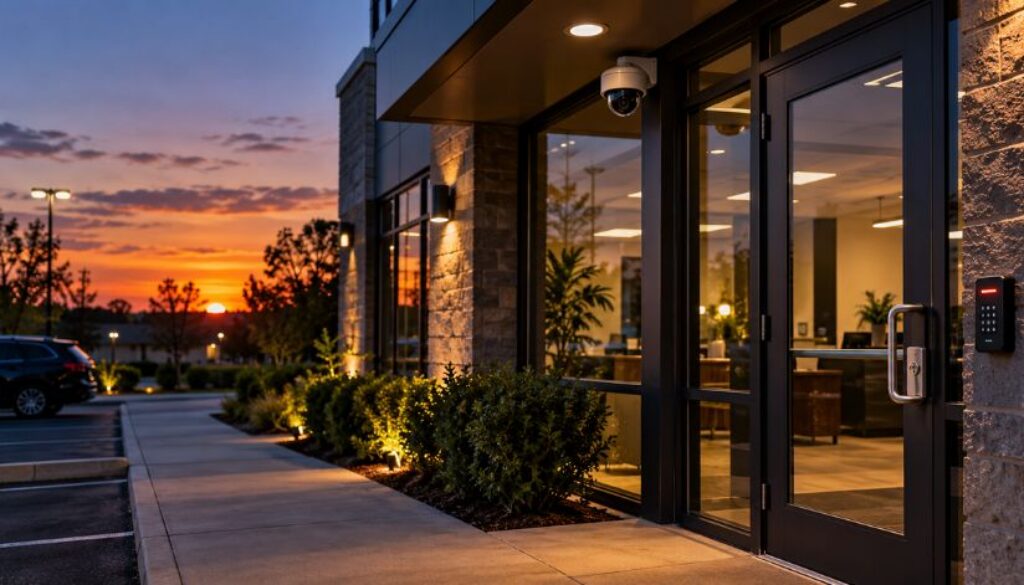
One of the most practical places to begin is exterior lighting. Walk around the property after sunset instead of relying on how the building looks during normal daytime hours. A parking lot that appears adequately lit at 3 p.m. may look much different at 7 p.m. Pay particular attention to areas employees and visitors regularly use, including entrances, exits, sidewalks, parking spaces, loading docks, dumpsters, gates, and paths between buildings. Look for burned-out lights, dark areas between fixtures, vegetation blocking illumination, and building features that limit visibility. Businesses with exterior cameras should also consider whether nighttime lighting provides enough visibility for the system to serve its intended purpose. A camera may cover the right area during daylight while providing less useful footage after dark. The goal is not to illuminate every corner of a property. Focus on useful visibility where people enter, leave, work, park, and move around the site.Think About Employees Arriving and Leaving After Dark
Earlier sunsets affect employees even when their schedules stay exactly the same. Someone who works a standard daytime schedule may begin leaving after dark in October. Employees who start early in the morning may experience similar conditions. Look at the routes employees take between the building and their vehicles. Are employee entrances well lit? Do exterior doors close and lock properly? Are parking areas visible from the building? Are employees expected to use entrances that become isolated after normal business hours? Employees should also know whom to contact if they notice a security concern. A burned-out light, unsecured door, damaged lock, or unfamiliar vehicle remaining on private property may deserve attention even when no immediate problem exists. This connects closely with situational awareness. Good awareness focuses on paying attention to your surroundings, recognizing changes, and responding appropriately without automatically assuming unusual behavior means someone has bad intentions.Review Your Closing Procedures
October is also a good time to revisit how your business closes for the night. Closing procedures often develop gradually. One employee checks the back door. Another turns off equipment. A manager activates the alarm. As staffing and responsibilities change, a routine that once worked well can become inconsistent. A written closing checklist helps remove uncertainty. Depending on your business, a closing routine might include checking exterior doors, confirming restricted areas are secured, inspecting public areas, verifying no customers or contractors remain inside, checking loading or receiving areas, and activating alarm systems. Responsibility should also be clear. Employees should know who handles each task and what happens when the person normally responsible is absent. Simple routines work best when everyone understands them and follows them consistently.Pay Attention to Parking Lots and Exterior Areas
Security planning often focuses heavily on the building itself, but much of the activity around a business happens outside. Parking lots, loading areas, storage yards, sidewalks, and secondary entrances deserve attention, especially once employees begin using them more frequently in darkness. Consider visibility across the property. Parked trailers, seasonal equipment, dumpsters, landscaping, temporary storage, and other objects may affect sightlines. You do not need to eliminate every visual obstruction, but you should understand how the property looks from the perspective of someone walking through it after dark. This is also a good opportunity to inspect gates, fences, locks, exterior doors, and other physical security measures. Fall weather adds another consideration. Wet leaves, frost, snow, and ice affect the routes people use around a property. OSHA requires employers to keep walking-working surfaces free of hazards such as snow and ice. If employees begin avoiding their normal route because of poor footing or other seasonal conditions, businesses should consider how those changes affect entrances, parking, and existing security procedures.Coordinate Security With Changes in Business Hours
Many businesses change their schedules as the holiday season approaches. Retail stores may extend hours. Warehouses may receive additional inventory. Organizations may host year-end events. Employees may work overtime or altered shifts. Security procedures should account for these changes. If a normally quiet entrance will see more activity, review whether existing access procedures still make sense. If deliveries begin arriving later, make sure employees know who has authority to provide access. If temporary or seasonal employees join the organization, include security procedures in their onboarding. Small operational changes matter because security depends heavily on routine. When the routine changes, the procedures supporting it deserve another look.Consider the Role of Security Patrols
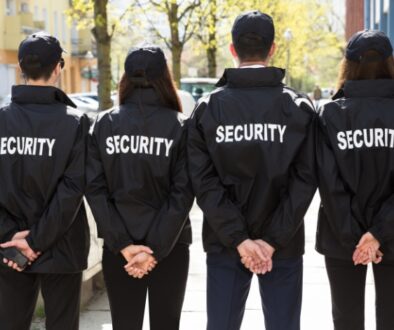
Some properties benefit from an additional security presence after normal business hours. At O’Brien & Associates, we provide mobile security and foot patrol services for businesses and events. Our current services include patrols in marked vehicles as well as foot patrols for outside perimeter coverage. Patrols should work alongside basic measures such as functioning locks, adequate lighting, access procedures, and employee awareness. They serve as one part of a larger security plan. The appropriate approach depends on the property itself. A small office building has different needs from a warehouse complex, retail property, industrial facility, or site with several separate buildings. This is why good security planning starts with understanding the property rather than choosing a service first.Use October as a Natural Time for a Security Review
Businesses do not need to wait for an incident before reviewing security. Seasonal changes provide a practical reminder to look at familiar surroundings differently. In October, one of the biggest changes is simple. More of the business day takes place in darkness. Walk your property after sunset. Look at entrances, parking areas, lighting, employee routes, exterior doors, and closing procedures. Ask employees whether they have noticed issues management might not see during normal daytime operations. As fall moves toward winter in Wisconsin, conditions will continue changing. Snow, ice, colder temperatures, holiday schedules, and longer nights will all affect how people use commercial properties. A review in October gives your business time to prepare.Security Planning That Fits Your Property
There is no single security plan for every business. Your building, operating hours, employees, customers, property layout, and daily activities all affect what makes sense.
If earlier sunsets have changed how your property feels or functions after dark, October is a good time to take a closer look. Review your entrances, exterior lighting, parking areas, closing procedures, employee routes, and any areas that receive less attention once daylight disappears. If you are unsure whether your current security procedures still fit your operation, we can help. O’Brien & Associates provides professional security services, including unarmed uniformed and plain-clothed guards, mobile patrols, and foot patrols for short- and long-term assignments. We can work with you to review your property, discuss the areas you are concerned about, and determine what type of security presence makes sense for your business. To discuss your security needs or learn more about our services, contact O’Brien & Associates and start with a conversation about your property, your operating hours, and the challenges you are trying to address.