When Does Your Business Need Fire Watch Security?
A fire alarm or sprinkler system goes out of service. Renovation work affects part of a building’s fire protection. A construction project involves hot work or other temporary conditions. A fire official tells the property owner that additional monitoring is required until normal protection is restored.
This is where businesses often hear the term “fire watch.”
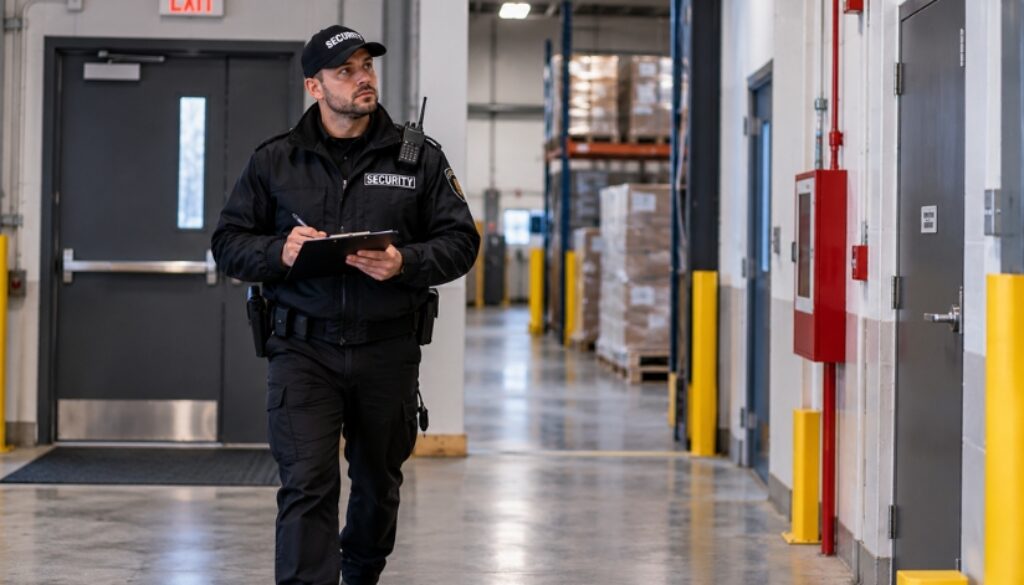
A fire watch is more than having someone remain in the building and occasionally look around. When required, it involves personnel assigned to monitor affected areas for signs of fire and other hazards, maintain required records, and follow established procedures for notifying occupants and emergency responders.
The exact requirements depend on the property, reason for the fire watch, applicable codes, and direction from the authority having jurisdiction. Businesses should work with their fire protection professionals and local fire officials to understand what applies to a specific situation.
O’Brien & Associates provides fire watch security as part of our security services for temporary and emergency needs. Understanding what a fire watch involves before one becomes necessary helps businesses respond more efficiently when a fire protection system or other condition changes.
What Is a Fire Watch?
A fire watch assigns personnel to monitor a facility or affected area when additional fire-safety oversight is required.
Wisconsin Department of Health Services guidance for covered healthcare facilities describes fire watch personnel as dedicated people circulating through the affected area for purposes including notifying the fire department and occupants of an emergency, preventing fires, addressing small fires, and protecting people from fire danger. Requirements for other businesses and properties depend on the codes and authorities governing them.
The important distinction is that a fire watch has a defined fire-safety purpose. It is not the same as an employee occasionally walking through the building while completing normal duties.
The areas monitored, frequency of patrols, documentation, communication procedures, personnel responsibilities, and duration of the watch should reflect the requirements established for the property.
O’Brien has covered fire watch procedures before. The core principle remains important: the local authority having jurisdiction plays a central role in determining what is required for a particular property and impairment.
Fire Protection System Problems Are a Common Reason
One of the most common reasons a business encounters a fire watch is an impaired fire protection system.
A sprinkler system might be out of service during repairs. A fire alarm system might experience a failure. Renovations might temporarily affect part of the building’s normal protection.
The specific response depends on the system, duration of the impairment, occupancy, affected areas, and applicable requirements.
For certain Wisconsin healthcare facilities, state guidance cites NFPA 25 requirements involving required sprinkler systems that remain out of service for more than 10 hours within a 24-hour period. The guidance calls for notification of the authority having jurisdiction and either evacuation or an approved fire watch for parties left unprotected until the system returns to service.
That threshold should not be treated as a universal rule for every Wisconsin business. Different systems, occupancies, codes, and local requirements affect what applies.
If your fire alarm, sprinkler, standpipe, or another fire protection system becomes impaired, contact the appropriate fire protection professionals and authority rather than assuming a particular timeframe automatically applies.
Planned Maintenance Deserves Planning Too
Not every impairment happens unexpectedly.
Businesses sometimes know in advance that a fire protection system will be affected by repairs, renovations, testing, construction, or another project. Advance notice gives management an opportunity to determine whether a fire watch or another measure will be required before work begins.
Ask the contractor how the project affects existing fire protection. Determine which areas will be affected and for how long. Confirm who needs notification. Establish what must happen before the system returns to normal service.
If a fire watch is required, arrange personnel early enough to avoid a last-minute staffing problem.
This matters for work taking place after normal business hours as well. A system might be impaired while a building remains partially occupied, while contractors are present, or during an overnight period when fewer employees are available.
Fire protection should be part of the project plan rather than a question addressed after a system goes offline.
Hot Work and Construction Create Different Considerations
Fire watch requirements also arise in connection with certain types of work.
Welding, cutting, grinding, torch use, and other work producing heat, flame, or sparks can introduce ignition concerns. Construction and demolition projects may also change normal building conditions by affecting alarms, sprinklers, exits, temporary heating, or combustible materials.
The rules applying to these activities depend on the work and location. OSHA, for example, has specific fire watch requirements for shipyard hot work, including requirements involving training, duties, equipment, and written policies. Those particular regulations apply to shipyard employment rather than every commercial workplace, but they illustrate why businesses should rely on the requirements governing their own operations instead of treating “fire watch” as one universal procedure.
Your local fire official, fire protection contractor, safety professional, or other appropriate authority should help determine which rules apply to the work taking place.
The same applies to construction sites. Temporary heating, hot work, changing access, incomplete fire protection systems, and unoccupied areas create circumstances different from those found in a fully operational building.
What Does Fire Watch Personnel Actually Do?
The exact duties depend on the fire watch requirements established for the property, but the role centers on monitoring for fire and fire-related hazards.
Personnel need to understand the areas they are responsible for checking, how often those areas must be covered, and what conditions deserve immediate attention. They should also know how to notify emergency services and building occupants if necessary.
Documentation is another important part of many fire watch assignments. Logs might record patrol times, areas checked, observations, and other information required by the authority or property procedures.
This is one reason businesses should avoid treating fire watch as an informal assignment. Someone should know exactly what the role requires.
Fire watch personnel also need to understand their limits. Their presence does not restore an impaired sprinkler or alarm system. Repairs still need to proceed, and the conditions requiring the watch still need to be resolved.
Fire Watch and Regular Security Are Not the Same Assignment
Businesses sometimes assume an existing security officer automatically satisfies a fire watch requirement.
The answer depends on the circumstances and requirements established for the property.
Regular security duties might include access control, monitoring entrances, exterior patrols, incident reporting, or other responsibilities. Fire watch has a specific purpose and often requires dedicated patrols, documentation, and attention to fire-related conditions.
If a security provider is going to perform fire watch, responsibilities should be clearly established.
Which areas need inspection? How frequently? What information goes into the log? Who receives reports? How will occupants be notified? Who contacts the fire department? When does the fire watch begin and end?
Clear answers protect against assumptions between property management, contractors, security personnel, and fire officials.
At O’Brien & Associates, our broader professional security services include security officers and mobile patrol options in addition to the fire watch services listed among our current capabilities.
Documentation Matters Throughout the Fire Watch
A fire watch might last several hours or continue longer while repairs take place. Good documentation provides a record of what occurred during that period.
Businesses should understand what records the authority having jurisdiction expects and make sure personnel follow those requirements consistently.
A log might include the name of the person conducting the watch, patrol times, areas inspected, observations, issues identified, and actions taken. The exact format should reflect the requirements applying to the assignment.
Records also help during shift changes. If several people cover the watch over an extended period, incoming personnel need a clear understanding of the assignment and any issues already identified.
This connects with the broader value of accurate business documentation. When circumstances change or questions arise later, reliable records provide information management does not have to reconstruct from memory.
Know Who Decides When the Fire Watch Ends
Businesses should not assume the watch ends simply because a repair technician has finished working.
The process for ending a fire watch depends on why the watch was established and what the applicable authority requires. A repaired system might need testing or restoration procedures before normal protection is considered back in service.
Clarify this at the beginning.
Ask who has authority to end the watch, what needs to occur first, and which notifications are required. Document when the watch officially ends according to the established process.
This prevents a gap where personnel stop monitoring because they believe the issue has been resolved while another party still considers the fire watch active.
Keep Fire Safety Procedures in Place When Conditions Change
Fire watch security helps businesses maintain fire safety when normal protection systems are impaired or when construction, hot work, or other conditions create added fire risk. Our role is to patrol designated areas, look for hazards or signs of a developing fire, keep an eye on access and exit routes, document rounds, and follow the procedures established for the property. If your business needs trained personnel to perform required fire watch patrols, contact O’Brien and Associates to discuss your property and the coverage you need.