How to Manage Access When Hiring Seasonal Employees
The holiday season changes staffing quickly for many businesses. Retailers add employees to handle customer traffic. Warehouses bring in workers to manage increased inventory and shipping. Other organizations extend hours or add temporary positions to cover vacations and year-end demand.
Most businesses put plenty of thought into recruiting, scheduling, training, and payroll when seasonal employees arrive. Access to the workplace deserves the same attention.
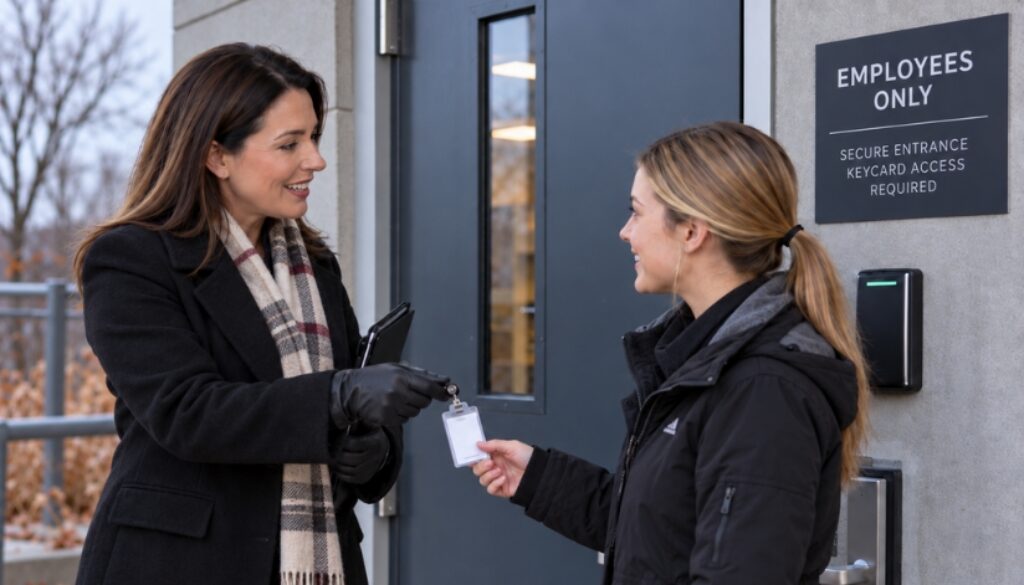
A seasonal employee may need a key, badge, door code, parking access, computer credentials, or permission to enter areas unavailable to customers. The goal is not to treat temporary employees differently because they pose a greater security concern. The goal is to make sure every employee receives the access needed for the job, understands the rules surrounding that access, and gives up those permissions when the assignment ends.
For businesses adding workers this November, a simple access review can prevent confusion during one of the busiest times of the year.
Give Employees the Access Their Jobs Require
Access control refers to the procedures a business uses to determine who is permitted to enter a property or particular area. For some businesses, this is as simple as a key to an employee entrance. Larger organizations might use electronic badges, individual access codes, gates, restricted rooms, or different permission levels for separate parts of a facility.
Seasonal hiring provides a good reason to review those procedures. Start with the employee’s actual responsibilities. Someone working at a retail checkout may need different access from a stockroom employee. A temporary warehouse worker might need access to a receiving area without needing access to offices, records, or other restricted spaces.
Giving every new employee the same permissions may seem easier during a busy hiring period, but access should reflect the work each person performs. This makes procedures easier to manage and limits confusion about where employees should and should not be.
O’Brien & Associates has previously discussed access control during seasonal staffing changes. The season might be different, but the basic principle remains useful. When staffing changes, businesses should review whether existing access permissions still reflect current roles and responsibilities.
Make Access Part of Seasonal Employee Onboarding
The first few days of seasonal employment often involve a large amount of information. New employees learn their schedules, job duties, workplace rules, technology, customer service expectations, and who to contact when they have questions.
Physical security procedures should be part of that onboarding.
Employees should know which entrance to use, where they are permitted to park, whether doors should remain locked, and what to do if a badge or key is lost. If certain parts of the building are restricted, explain those boundaries instead of assuming a new employee will understand them.
The same applies to visitors. A seasonal employee who has been on the job for three days might not know whether a vendor, contractor, or delivery driver should be allowed through an employee entrance. Give employees a clear process for directing visitors or contacting someone with authority to provide access.
This does not require turning orientation into a security seminar. A short, clear explanation of access procedures often provides employees with what they need to follow the same routines as permanent staff.
Avoid Sharing Access Credentials
Busy workplaces sometimes develop shortcuts. One employee holds a secured door for several coworkers. A department shares one access code. A spare key stays in a convenient location because several people need it.
These arrangements might seem efficient, but they make access harder to manage. If several people share the same credential, the business loses some ability to determine who used it and whether the permission should still be active.
Whenever the system allows, assign credentials to individual employees. Electronic badges and individual codes also make offboarding easier because one person’s access can be addressed without changing credentials for an entire department.
Employees should know how to report lost badges, keys, or other credentials promptly. Waiting until the end of a shift or several days later creates unnecessary uncertainty about who might have access.
The objective is straightforward. Your business should have a reasonable understanding of who has permission to enter restricted areas and which credentials provide that permission.
Remember That Access Extends Beyond the Front Door
Businesses often think about access in terms of entering the building, but employees move through many different spaces once they are inside.
Stockrooms, offices, cash-handling areas, server rooms, maintenance spaces, loading docks, storage areas, employee-only sections, and rooms containing sensitive records might all require different levels of access.
Think about the information and property associated with each position. Does the employee need physical access to a particular area to perform the job? If not, there may be little reason to include that permission.
Digital access deserves similar attention. Seasonal employees might receive accounts for scheduling, inventory, point-of-sale, communication, or other business systems. Those permissions should also reflect the employee’s role and should be addressed when employment ends.
Clear boundaries help employees too. Someone starting a temporary position should not have to guess which areas or systems are part of the job.
Keep Managers Involved When Roles Change
Seasonal employees sometimes move between responsibilities as business needs change. Someone hired for stocking might begin helping with online orders. Another employee might start closing the store or working a different shift.
Access permissions should change when the job changes.
Managers are often in the best position to recognize this because they know what each employee is actually doing. If someone takes on a new responsibility requiring access to another part of the property, management should follow the established process for updating permissions.
The same principle works in reverse. If an employee no longer performs a responsibility, consider whether access associated with the old role is still needed.
This is easier when businesses maintain accurate records. Our discussion of why business documentation matters explains how organized records help businesses verify information and make informed decisions. An accurate list of keys, badges, codes, and permissions provides the same type of clarity when staffing changes.
Plan for Offboarding Before the Holiday Rush Ends
Seasonal employment has something businesses know from the beginning: many assignments will end within a relatively short period.
Do not wait until January to decide how access will be removed.
Establish the process before employees begin. Determine who collects keys and badges, who disables electronic access, who removes system permissions, and how completion gets documented. If employees have company equipment, uniforms, identification, or other property, include those items in the same process.
Timing matters. Access should reflect the person’s current employment status and responsibilities rather than remaining active simply because no one has completed an administrative task.
Offboarding also applies when someone leaves earlier than expected. Managers should know whom to contact so access changes do not depend on the employee reaching the originally scheduled end date.
A simple checklist makes this easier. The process does not need to be complicated, but someone should own it.
Include Seasonal Employees in Normal Security Procedures
Seasonal workers are part of your workforce. They should receive the information needed to follow the same relevant security procedures as everyone else.
Explain how to report an unsecured door, lost credential, damaged lock, or unfamiliar person in an employee-only area. Make sure they know whom to contact if something happens during an evening or weekend shift when fewer managers are present.
This is especially useful during the holidays because normal routines often change. Businesses stay open later. Deliveries arrive more frequently. Managers work different schedules. Temporary displays or inventory alter familiar spaces.
Good situational awareness starts with noticing what is happening around you and knowing how to respond when something does not fit normal procedures. New employees need enough familiarity with those procedures to recognize when something deserves attention.
Avoid placing investigative responsibility on employees. Their role is usually much simpler. Follow established procedures, report concerns, and provide accurate information about what they observed.
Review Physical Security During Busy Staffing Periods
Seasonal hiring also provides a useful reason to look at the property itself.
Are employee entrances functioning properly? Do doors latch after someone enters? Are parking areas adequately lit for employees leaving later in the evening? Do managers know who has keys? Are restricted areas clearly identified?
These basic measures become more important when more people are moving through the property and learning new routines.
Some organizations also use professional security during periods of increased activity. Our security services include uniformed and plain-clothed security personnel, mobile patrols, access control, and other options for businesses with short- or long-term security needs.
Professional security does not replace good employee procedures. The two should support each other. Security personnel need to understand the organization’s access expectations, and employees need to understand their own responsibilities.
Make Seasonal Access Easier to Manage
Hiring seasonal employees should not require rebuilding your security procedures every November. A consistent system makes the process easier for employees, managers, and anyone responsible for building security. Give people the access their jobs require, explain how to use it, maintain accurate records, and have a clear process for removing permissions when assignments end.
If seasonal staffing or changing business hours have created new access or security needs at your property, we can help you evaluate your options. Our professional security services support businesses with access control, security personnel, mobile patrols, and other property security needs. Contact O’Brien and Associates to discuss your operation and the type of security support that may fit your business.