Security Patrol vs. Security Guard: Which Fits Your Business?
Once a business decides it needs an added security presence, another question usually follows. Does the property need a security guard stationed in one area, or would a patrol moving throughout the property make more sense?
The answer depends on what you need security to accomplish. A retail business with a busy public entrance has different concerns than a warehouse with loading docks, employee parking, outdoor storage, and several exterior doors. The hours when coverage is needed, the size of the property, visitor activity, and the areas requiring attention all play a role.
Security guards and patrols provide different types of coverage. Understanding those differences helps you choose an approach based on how your property operates rather than assuming one type of security fits every situation.
What Is the Difference Between a Security Guard and a Security Patrol?
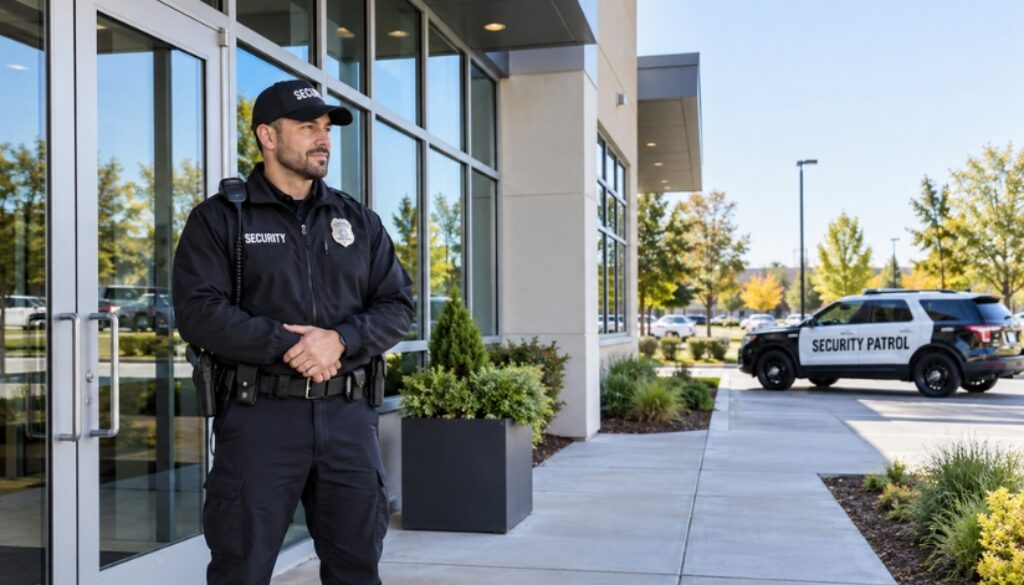
A stationary security guard generally works at a designated location or within a defined area for an assigned period. Depending on the property, the guard might monitor an entrance, support access procedures, observe activity, document incidents, or provide a visible security presence.
Stationary does not necessarily mean someone remains in one chair throughout an entire shift. A guard’s responsibilities depend on the assignment. The main distinction is that security coverage remains focused on a particular location or property where an ongoing presence is needed.
A security patrol works differently. Rather than concentrating primarily on one position, security personnel move through designated areas according to the needs of the property. At O’Brien & Associates, our mobile security and foot patrol services include patrols in marked vehicles as well as foot patrols for outside perimeter coverage.
Patrols often make sense when a property has several areas requiring attention. Parking lots, exterior doors, loading docks, storage areas, separate buildings, and property perimeters are common examples. The goal is to provide coverage across designated areas rather than maintaining a continuous presence at one location.
When Does a Stationary Security Guard Make Sense?
A good place to start is by asking whether one part of your property requires consistent attention.
Consider a facility where employees, vendors, contractors, and visitors regularly enter through the same location. A security guard stationed near that entrance might support the organization’s existing access procedures, observe activity around the entry point, and provide a clear person for employees or visitors to approach when they have a security concern.
Continuous coverage also makes sense in some retail settings, events, reception areas, gates, and other locations where activity remains concentrated in one place. Businesses dealing with a temporary operational change might also want a guard assigned to a particular area for a defined period.
At O’Brien & Associates, our security guard services include unarmed uniformed and plain-clothed guards for short- and long-term assignments. The right arrangement depends on what is happening at the property and what responsibilities need to be covered.
Those responsibilities should be established before an assignment begins. Businesses should determine what the guard is expected to observe, which access procedures apply, who the appropriate business contacts are, and how incidents should be documented. Clear expectations help keep the security role focused on the needs that led the business to seek coverage in the first place.
When Is a Security Patrol a Better Fit?
Now consider a warehouse or commercial property with several exterior doors, employee parking on different sides of the building, loading docks behind the facility, and an outdoor storage area. A security presence concentrated at one entrance does not provide the same coverage across all of those locations.
This is where patrols become useful. A mobile patrol provides a way to move between designated areas across a larger property, while a foot patrol allows security personnel to cover specific portions of a site on foot. Depending on the assignment, patrols might include exterior areas, parking lots, entrances, perimeters, or other locations identified by the business.
Patrols may fit warehouses, industrial properties, office complexes, retail properties, events, construction-related sites, and facilities with multiple buildings or larger grounds. They also provide an option for businesses that do not need someone continuously stationed at one location but still want a professional security presence during certain hours.
The important part is defining what the patrol should cover. “Check the property” leaves too much room for interpretation. Businesses should identify which areas deserve attention, when patrols are needed, what should be documented, and what procedures apply if security personnel encounter an issue.
Let Your Property Layout Help Guide the Decision
Property size matters, but layout often tells you more about the type of coverage you need. A smaller building with one primary entrance might have concentrated security needs, while a larger facility with several buildings, parking areas, or outdoor operations might benefit from coverage spread across the property.
Walk through your site and think about where people and vehicles actually go. Identify employee and customer entrances, delivery areas, parking lots, exterior storage, restricted spaces, gates, and portions of the property that receive activity outside normal business hours.
Visibility matters as well. Buildings, landscaping, parked trailers, equipment, fences, and other property features may limit sightlines between different areas. A guard stationed near the main entrance will have a different view of the property than someone conducting regular exterior patrols.
The same principle applies after dark. Employees who leave through different doors or park in several areas may create security needs spread across the property. Our discussion of situational awareness in the workplace explains why understanding your surroundings and recognizing changes are important parts of workplace safety. Looking at your property from this perspective also helps identify where a security presence would provide the most practical value.
Consider When You Actually Need Security Coverage
The right type of security also depends on when you need it.
Some businesses want coverage during public operating hours, when employees, customers, contractors, and deliveries create steady activity. Others have greater needs during evenings, overnight periods, weekends, temporary shutdowns, or times when fewer employees are present.
A retail business, for example, might want a visible security presence during busy customer hours. An industrial or commercial property might place greater emphasis on exterior areas after most employees have gone home. Events create another set of needs because entrances, parking, crowd movement, and operating hours differ from the property’s normal routine.
Businesses should also distinguish between ongoing and temporary needs. Construction, equipment installation, special events, temporary vacancies, building repairs, or changes in operations might create a need for added security without requiring a permanent arrangement.
Our professional security services include short- and long-term assignments, which gives us the ability to discuss coverage based on the duration and circumstances involved rather than assuming every business needs the same schedule.
Think About Access, Visitors, and Exterior Areas
Access is another important consideration when comparing a stationary guard with patrol coverage. Businesses with frequent visitor or vendor activity should have clear procedures for who enters the property, how authorization is confirmed, where visitors should go, and which areas remain restricted.
When most of that activity occurs through one entrance, a stationary security presence may fit the property well. A guard works from a consistent location while supporting the access procedures established by the business.
Patrols address a different need. They allow security personnel to cover areas where activity is spread out, including parking lots, loading docks, storage yards, alleys, gates, and building perimeters. This is particularly useful when no single location provides visibility across the entire site.
Neither approach replaces good access procedures, functioning locks, exterior lighting, or employee awareness. Professional security works best as part of a larger plan. Employees should still know which doors to use, how to handle visitors, where to report maintenance or security concerns, and what to do when normal procedures change.
Some Properties Benefit From Both Approaches
The choice between a guard and a patrol does not always need to be one or the other. Some properties have separate needs that call for both types of coverage.
A business might have a security guard at its primary entrance while another officer conducts exterior patrols. An event might need personnel at access points along with security moving through the venue. A larger facility might need concentrated coverage in one area while maintaining periodic attention elsewhere on the property.
Using both approaches only makes sense when each serves a clear purpose. More personnel do not automatically create a better security plan. Businesses should first identify what they need to accomplish and then determine which resources fit those responsibilities.
Ask practical questions. Do you need continuous attention at an entrance? Do you need someone moving between multiple exterior areas? Are employees or visitors arriving throughout the night? Does the property include separate buildings or large parking areas? Is the need temporary or ongoing?
Those answers provide a stronger foundation for determining the type of coverage that fits your business.
Make Documentation Part of Your Security Plan
Whether you use a stationary guard, patrols, or both, documentation should be part of the plan. Businesses should decide what security personnel need to record, who receives reports, who should be contacted after hours, and what procedures apply when something requires immediate attention.
A useful report might document an unsecured door, damaged lock, burned-out exterior light, unusual activity, property damage, or another issue observed during an assignment. Consistent records give management information to review and help establish whether the same issues are occurring repeatedly.
Our article about why business documentation matters discusses how good records help establish timelines, verify information, and support informed decisions. The same principle applies to security reporting. A written record provides more useful information than relying on informal conversations or someone’s memory days or weeks later.
Reporting expectations should reflect the assignment. A guard stationed at an entrance will observe different activity from someone conducting exterior patrols. Defining what should be documented helps make the information more useful to your business.
Start With What Your Business Needs Security to Accomplish
Choosing between a security guard and a security patrol starts with understanding your property. Consider where people enter and leave, where activity occurs, which areas need attention, when coverage is needed, and whether your concerns are concentrated in one location or spread throughout the site. From there, you can determine whether a stationary guard, mobile patrol, foot patrol, or combination provides the right type of coverage.
If you are unsure which approach fits your property, we can help you evaluate your options. At O’Brien & Associates, we provide security guards, mobile security, and foot patrol services for short- and long-term assignments based on the needs of each property. If your business is considering professional security coverage, contact O’Brien and Associates to discuss your property, operating hours, and the areas where a professional security presence may support your existing procedures.